

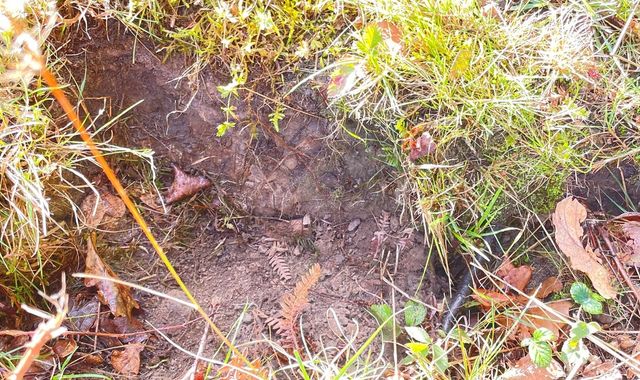
Conservationists have said the theft of a rare ant colony from a nature reserve in Devon is a "significant loss" which "sets back years" of hard work by staff and volunteers.
Devon Wildlife Trust said a nest belonging to narrow-headed ants was stolen from Chudleigh Knighton Heath, which is the last stronghold in England for the species.
Along with the site in south Devon, the ants are only known to be at "a handful of sites" in Scotland.
A single nest can hold a colony of between 1,000 and 5,000 ants, along with one or more breeding queens, which can live for 25 years.
The ground surrounding the ants showed clear signs of digging with a spade when it was discovered last month.
The theft has been reported to Devon and Cornwall Police.
Julia Balfour, of Devon Wildlife Trust, said: "The removal of an established nest is a significant loss for this species.
"Narrow-headed ant colonies develop slowly, and each mature nest, with its long-lived queens, represents many years of growth that cannot quickly be replaced.
"This is a crime every bit as serious as illegal raids on wild bird eggs. It shows the pressures that our nature and wild places are under.
"Our most recent survey recorded 142 active nests on the nature reserve, so every nest matters.
"This is the last population of narrow-headed ants in England, and losing even one colony sets back years of careful work by our staff, volunteers and partners."
Laura Krusin, of invertebrates charity Buglife, said: "The destruction to this wonderful site and the removal of the narrow-headed ants that call it home is heartbreaking and highlights the threats still impacting these rare invertebrates."
The species, which is named after the distinctive "pinched" look to their heads, has seen its numbers dwindle over the past 100 years as its favoured heathland homes have been lost to building development and agricultural change.
Chudleigh Knighton Heath is a site of special scientific interest, while narrow-headed ants are listed as "near threatened" on the International Union For Conservation Of Nature's red list, which classifies species at high risk of global extinction.

(c) Sky News 2026: Rare ant colony stolen from nature reserve in Devon
 Hackers target refrigerators in Ireland and European countries in new wave of cyber attacks
 Barclays to begin car finance payouts months before outcome of legal challenge
 Ministers to hold urgent talks with Poundland chiefs