

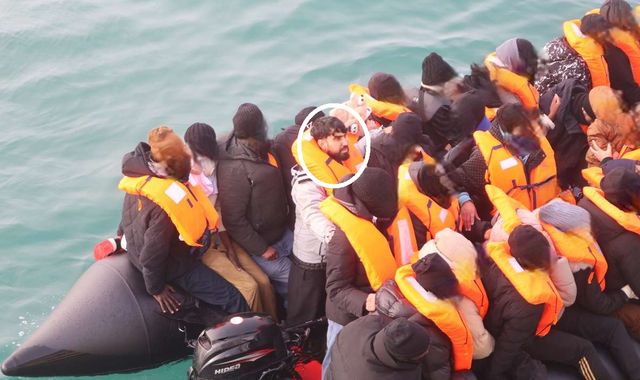
The first two people to be sentenced under a new offence of endangering others during a Channel crossing have been jailed.
Afghan national Mohammad Tajik, 32, was sentenced to two years in prison at Canterbury Crown Court on Wednesday due to his involvement in a crossing on 17 January.
Tajik abandoned the dinghy he was driving across the English Channel and its passengers when a rescue ship arrived, the Crown Prosecution Service (CPS) said.
The boat was overcrowded and some passengers were not wearing life jackets during the attempted crossing in poor weather conditions.
Prosecutor Daniel Bunting said Tajik had: "No experience or knowledge of piloting a boat, he was asking others to look on YouTube for assistance."
At the same time, Sudanese national Alnour Ali, 26, was sentenced by the court to two years and three months in prison over his role in a separate crossing.
Ali had admitted to the charge of endangering others during a sea crossing on 9 April.
On the same day, two men and two women drowned after being swept away by strong currents while trying to climb on to a dinghy at Equihen-Plage, near Boulogne-sur-Mer in France.
However, Judge James made clear that Ali was not being sentenced in relation to those four deaths and hit out at misinformation, which they branded as "unhelpful".
Drone footage was played in court of the boat with 74 people on board, where Ali is seen driving while wearing a pink hat.
Passengers were seen in the footage straddling the side of the boat; some had their legs dangling in the water.
A French boat came up alongside the dinghy and handed out life-jackets, at which point Mr Bunting said Ali had the opportunity to stop.
Sentencing them, Judge Simon James said: "The inherent dangers of seeking to navigate one of the busiest shipping lanes in the world in a vessel which was never designed to undertake such a journey are obvious.
"However, the risk of death and serious injury are significantly increased when boats have no navigational aides, are overcrowded and those on board are not adequately equipped with safety equipment."
Read more from Sky News:
Ukrainian strikes hit arms factory and oil refinery deep in Russia
Hundreds of phones and laptops lost by MoD
Barrister Paul Hogben told the court Ali was of good character and was ordered to steer the boat by armed people traffickers when he embarked.
He was born in a village in the Darfur region of Sudan where he and his parents, three brothers and six sisters were forced to flee their home during the civil war.
The court also heard from barrister Niall Doherty, defending Tajik, that the father-of-one left Afghanistan after witnessing the Taliban shoot and kill his father and brother for refusing to put yellow powder in food served to soldiers in their restaurant, which they believed would have fatal consequences.
Fearing he would be targeted, he fled to seek asylum, first trying in Greece where he was refused, before travelling on to Europe and the UK.
The pair both have submitted claims for asylum since being in the UK, the court heard.
What is the new offence?
Endangering others during a journey by sea to the UK is a new offence that came into force in January as part of new border security legislation.
Under the offence, those who endanger or risk another life at sea could face up to five years in prison. That rises to a maximum of six years for those in breach of a deportation order.
According to the Home Office, the offence is designed to stop people being crammed into unsafe boats and would apply to those involved in physical aggression and intimidation, as well as anyone who resists rescue.
It covers physical or psychological injury and journeys by water to the UK from France, Belgium and the Netherlands.

(c) Sky News 2026: Jail for first offenders sentenced under new Channel crossing law
 Henry Nowak murder protesters get prison for 'hate crime' violence
 Bill Gates says Jeffrey Epstein tried to use information about his private life as 'leverage'
 Sports Direct owner launches takeover offer for Hugo Boss